
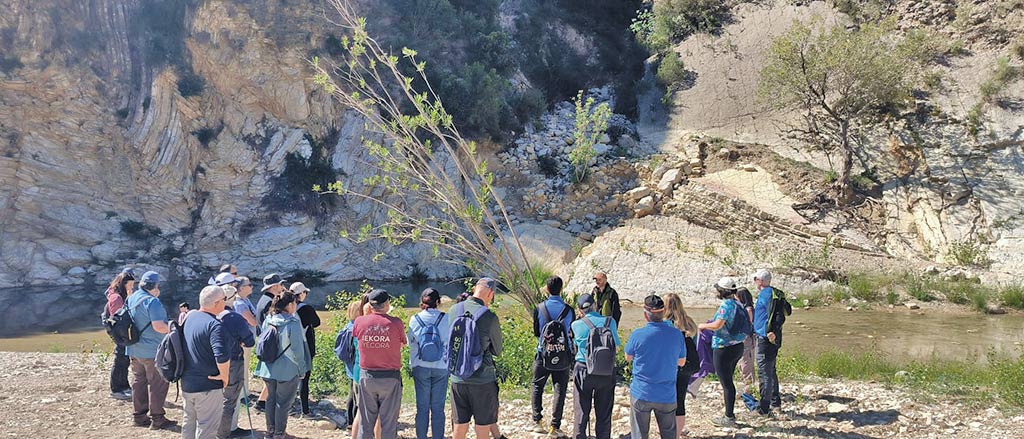
Within the framework of the RiVIVE project, the University of Girona and the Universitat Politècnica de València participated, with their own proposals, in the third edition of the Walking Rivers walks, held on Saturday, May 16th.
Walking Rivers is an international environmental awareness initiative that organizes walks along riverbanks to reconnect the population with these ecosystems and raise awareness about their importance. During this public event, participants walk along river stretches while observing nature and taking part in educational talks or outreach activities, thereby promoting river protection and reflection on issues such as pollution and drought.
We carried out this initiative jointly with various local stakeholders from Baix Ter and Sot de Chera—the case studies of the RiVIVE project—with the aim of creating meeting spaces to share the richness, complexity, and vitality of these river environments.
Baix Ter
In Baix Ter, a walk was organized along the left bank of the Ter River, following the Rec del Molí (irrigation canal) between Verges and Bellcaire. During the route, we were joined by Salvador Vega, an expert on the local history, the recs (traditional canals), and the social life surrounding them. This local knowledge was combined with that of Xavier Quintana, a researcher from the University of Girona, who spoke about the ecology of the aquatic communities in the canals and their relationship with the Ter River and its cycle. Following the guidelines of the Walking Rivers 2026 initiative, we also immersed ourselves in the soundscape to activate the sensory experience of the river landscape and everything it conveys.
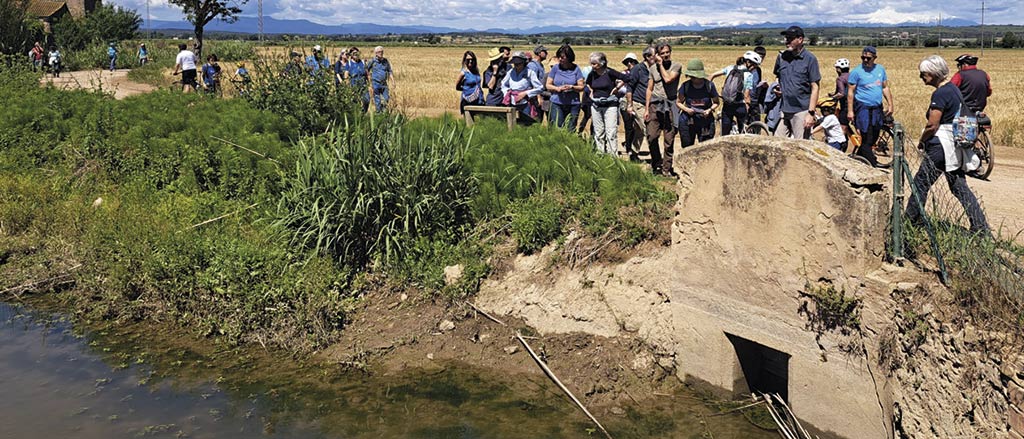
Nearly 40 highly enthusiastic and engaged people participated in the activity. Everyone enjoyed the route on a sunny but pleasant day, which fostered an atmosphere of trust where participants could share memories, experiences, and ask questions regarding the canal and water management. The walk culminated in Bellcaire, where a small refreshment awaited us, accompanied by an exhibition organized by the Gent del Ter association. They explained the historic struggle to prevent the piping of the canal in the early 2000s using photographs from a traveling exhibition.
All in all, it was a highly successful experience that could be continued in the future by visiting other historic canals that form part of the human and environmental landscape of the Ter River and this region.
Sot de Chera
The Walking River event in Sot de Chera took place around the Sot or Reatillo River, the case study led by the Universitat Politècnica de València within the RiVIVE project. Organized by the Town Council of Sot de Chera—represented by its mayor, Tomás Cervera; the Councilor for Culture and Tourism, Carmen Faubel; and the Local Development Agent, Beatriz Montón—and co-organized by the UPV, the route featured contributions from several experts. These included geology experts Francisco Ruíz, Carlos Santiesteban, and Patricio Villafañe from the Department of Geology (Faculty of Biological Sciences, University of Valencia); biology experts Julián Soriano and Gabriel Ballester from the Chera-Sot de Chera Natural Park; and hydrology expert Carles Sanchis Ibor from the Irrigation and Mediterranean Agrosystems Research Center at UPV.
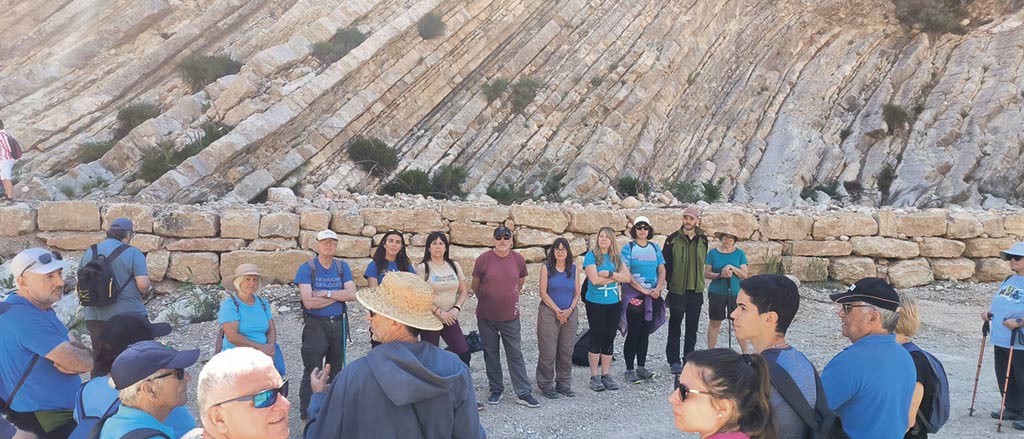
This route highlighted the post-DANA effects on the Sot River, particularly regarding the layout of the riverbed, ephemeral streams (ramblas), ravines, and new fossil deposits. It also addressed the genesis of the materials, the flood’s impact on local fauna and flora, the river’s behavior as a classic example of a Mediterranean watercourse, and the sheer volume of water involved in the catastrophe.
It was a vital experience for deepening understanding of the relationship between the inhabitants of Sote and their river.
A day to rediscover our rivers
The Walking Rivers walks have underscored the value of rivers as living spaces for gathering, learning, and connecting nature and society. In both Baix Ter and Sot de Chera, the exchange of scientific knowledge and local experiences has enriched the collective view of these ecosystems, reinforcing the commitment to their preservation. Initiatives like this consolidate the role of the RiVIVE project as a driver of awareness and action, opening the door to new activities that continue to strengthen the bond between people and their rivers.
The success achieved during the day and the energy brought by more than 80 participants invite us to repeat the experience in next year’s edition of Walking Rivers. We will keep you updated!